Posts

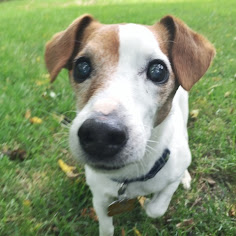
Looking for a canine enrichment option that won’t be a foreign body risk but is still fun? Help is here

Image
Canine enrichment is a topic I bring up not only during consultations, but throughout the pet’s lives that I’m tending. It’s vital in keeping dog’s happy, with its ability to stimulate the brain, engage the body and at times, use problem solving skills. It’s also a stress reliever.  Enrichment can take many forms, can be employed at any age, and I’m deeply appreciating the notion that so many pet product companies have come up with novel designs for pets, especially dogs.  Some of them have been designed for those who are power chewers—you know, those dogs who will routinely destroy and swallow commercially available toys. Sadly, a percentage of those dogs have or will land in a veterinary emergency hospital after ingesting a chunk of said toy and developing an obstruction. And so, families have no other option but to skip offering traditional toys, but what fun is that for them or the dog?  I’ve stumbled on a workable and safe solution that any dog—no matter the telos, s...
Has ‘work-from-home’ influenced how we view and tend pet loss and grief?

Image
A commonly-asked question is, how does one respond to people who say,  Grieving over a pet? I mean, it’s just a dog… you can get another one? I won’t go too far into the weeds with how comments like these lack sensitivity. I can say from my years in companioning families through their pet’s journey through hospice and end-of-life that most of the time, it’s hard for other people to be sensitive to situations they’re not familiar with, or find too emotionally-grueling to navigate. And so, the comments that land like a lead weight during an already brittle time erode what emotional and physical resources those grieving have left.    We know that when people have space held for them to move through their grief, they can fare well. It’s when that disfranchised grief is minimized, ignored or is used to shame is when problems begin. And those responses—stressors in themselves—from others add to the trauma and emotional toil that is experienced.    We find this is espe...

Want to enhance your pet's overall quality of life as they age? Capitalize on their youth

Image
Pets are living healthier lives, thanks to the advances in veterinary medicine and better understanding of their needs, both behavioral and emotional. Healthier also means longer , and that has implications that families might not have expected with their current generation of pets: challenges surrounding age-related decline. Having seen many families through what is now their third generation of pets, and walked with them through their pet’s fourth life stages, there have been so many advances in medication and complementary therapies to enhance comfort — which in turn supports mobility — along with tools in helping that go more smoothly. All pets experience age-related decline. And I’m going to focus on talking about one area that invariably comes to the forefront: how dogs and cats are able to manage changing mobility and independence with the use of products and tools.  With cats, we know they have certain spots in the house that they really love to hang out in, and they’re us...

Imagining your life after a pet’s death during their decline can seem like a betrayal. It’s actually a healthy tool.

Image
“Are you just waiting for her to die?” That was a question that two people—one who I’m closely tied to—asked me when I spoke about plans I was sketching together to travel to a place I’d never been. It was 2015. Puerto Rico had been on my mind. And as a late-bloomer when it had come to traveling, much less doing so alone, it had become an essential mental well-being tool. It also, ironically, helped to squash paralyzing social anxiety that had plagued me into adulthood.  I’d not traveled in the final few months of Gretchen’s life. And as a sole human in the household, I was her main caregiver.  Gretchen was my nearly 16 year-old St. Bernard/shepherd mix. I’m quite certain in imagining the gasp (16!) that invariably escaped from your lips that I need not go into too much detail about how heavy the caregiving was for a geriatric, large breed dog with advanced osteoarthritis, a touch of renal disease and had been recently treated for hemorrhagic gastroenteritis . Gretchen was nev...

A pet’s dental health makes an impact on their final months of life

Image
  February is Pet Dental Health month. I’ll skip the usual ‘you should get your pet’s teeth and oral health tended to’ without adding context.  Since I specialize in caring for pets in their final years, months, days and hours, I’ve had the honor of observing a lot of pets in these stages of life. I see the health challenges and complications they are faced with and need tending. But more on that in a minute.  Though it’s uncommon for a pet in their final months of life to undergo dental exams and cleanings, they certainly benefit from having them regularly throughout their lives. We know that maintaining overall oral health—including regular exams, X-rays and cleanings addressing any periodontal disease, and any extractions or root canals that need doing— boosts a pet’s health at younger stages. And that sets the stage for helping a pet manage at a time when they’re less resilient, experience more pain-related issues, and need to be handled and interacted with more oft...

An often overlooked strategy for tending to pets in thgekp final life stage — made easier with a common household object

Image
Tending to a pet’s basic hygiene and grooming is a part of the work I do with pets in fourth life stage (the stage of life where a pet of any age is in a state of decline due to a life-limiting diagnosis or age-related causes).   Some pets need help with hygiene, like when they have urinary or fecal incontinence. This is necessary to keep their skin and fur clean and dry, and otherwise in good integrity in those areas. And while we need to be keeping an eye on that as well as keeping their bedding dry and free from waste, more commonly pets need help with basic grooming of their fur.  It just gets harder for them to manage as they age, especially with cats, who I’ll be focusing on here.  The tell-tale unkempt look that encroaches on a normally fastidious groomer—usually from the mid-section of the body backward—tells us that a cat is finding it too arduous or painful to reach their hind end. Osteoarthritis is a major contributor, though with less activity in advanced age ...