Posts

Showing posts matching the search for enrichment

No Pet Left Behind: Enrichment for Every Age and Ability

Image
The five pillars of animal enrichment (and why they matter more than ever) Every pet has a  telos  — an essential nature, a "beingness" — and that idea shapes how I work with them and their families. Being able to express themselves in ways aligned with their species, their telos, is essential to their well-being. Their well-being has always mattered to me and the families I've worked with over the last two decades. But over the last several years, one piece of that puzzle has risen to sit right alongside their physical health:  enrichment . Enrichment is more than a game of fetch (or keep-away, if you know what I mean), a walk around the block, an occasional chew bone, or hanging out with trusted humans and other pets. It's a whole framework — five pillars, in fact — and the pet guardians I partner with have embraced it enthusiastically, especially during the times their pets need it most: recovering from illness or injury, or on crate rest after surgery. Enrichment ...
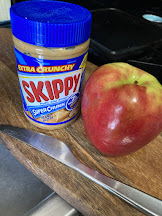
Looking for a canine enrichment option that won’t be a foreign body risk but is still fun? Help is here

Image
Canine enrichment is a topic I bring up not only during consultations, but throughout the pet’s lives that I’m tending. It’s vital in keeping dog’s happy, with its ability to stimulate the brain, engage the body and at times, use problem solving skills. It’s also a stress reliever.  Enrichment can take many forms, can be employed at any age, and I’m deeply appreciating the notion that so many pet product companies have come up with novel designs for pets, especially dogs.  Some of them have been designed for those who are power chewers—you know, those dogs who will routinely destroy and swallow commercially available toys. Sadly, a percentage of those dogs have or will land in a veterinary emergency hospital after ingesting a chunk of said toy and developing an obstruction. And so, families have no other option but to skip offering traditional toys, but what fun is that for them or the dog?  I’ve stumbled on a workable and safe solution that any dog—no matter the telos, s...

Safe canine enrichment for every dog—even those who routinely destroy their toys

Image
Canine enrichment is a topic that comes up often with families and professionals in animal behavior, dog training and pet care.  Kongs and related toys are an oft-recommended option to provide a fun and stimulating outlet for dogs in a variety of scenarios. But in some cases, there’s a valid concern: dogs who can’t be trusted with these items for fear of choking hazard or foreign body in the GI tract. The good news is, a simple idea gleaned from the Science of Animal Behavior Conference 2019 means that these dogs need not miss out on the enrichment and fun that other dogs enjoy. And a side benefit for shelters, rescues, foster situations and even boarding facilities means that sanitation isn’t a worry.  The vlog below fleshes out the details on this idea that has already made for some very happy dogs in my care. With over 20 years of experience in pet care and the past 12 of those focused on animal hospice, Lorrie Shaw is a Certified Animal Hospice Practiti...

Alternatives to catnip can be a happy-making boon for fussy or geriatric cats

Image
Enrichment for indoor cats is the focus of a lot of talk these days, which is something I'm glad to see. With the push to keep cats indoors, it's keeping them healthier and safer, but in all honesty, many cats are bored to death.  Cats are hunters. In the wild, they hunt, eat, groom, sleep, repeat—24 hours a day. They don't suffer boredom the way that indoor cats do.  In a piece from earlier this year, I highlighted just one of the ways that veterinary professionals are trying to combat that. But there's so much more that we can do. I often recommend using catnip as a form of enrichment in cats, especially those who are indoors-only, but it's also useful in other ways.  Before taking cats to the vet, medicating them or administering sub-q fluids , I give them a little to set a positive tone, and coupled with Feliway it's especially effective. I also use it as an enhancement to boost a waning appetite in older cats, especially those struggling w...

Planning ahead empowers your pets to better handle your absence during holiday travel

Image
There’s something to be said for the benefits of routine. To some degree, I think we’re wired for it. It offers a sense of familiarity in that we know what to expect, even a sense of safety. When routines are disrupted, no matter how little, it can make an impact on how well we humans and companion animals navigate through our respective days and nights. A frequent conversation that I end up engaging in this time of year is about how busy I must be. The truth is that my schedule, no matter the ratio of healthy pets, those with special behavioral needs or those receiving palliative or hospice/comfort care, is no busier during the holidays than other times of year. Long ago, I understood the virtues of curating my schedule carefully so that there is adequate time to tend to everyone, including myself. I’m also all too aware of how stressful this time of year can be for the families in my care, with the prospect of traveling when it seems every other family is, maybe dealing with any ba...

Understanding scratching behavior in cats can keep your furniture—and the human-animal bond—intact

Image
Nearly every time I walk into a client's home to care for their cat, the pet will greet me and within a few minutes of my arrival, if they're amenable to coming out and interacting, they'll begin giving their scratching post or cat tree a good bit of attention by rubbing up on it and scratching. This isn't at all surprising to me; cats express themselves in all sorts of ways and by them coming out and engaging in normal, healthy activity when their people are away, tells me they're doing well. There are benefits of scratching—some of them include being that it allows them to get in a good stretch, it's used an olfactory marker and an emotional release—so any I say, scratch away, friends. But only if its done it in an appropriate place, of course.  Inappropriate scratching is a bone of contention in many households with cats, and it's understandable. The activity can produce mighty destructive results; I've seen many a piece of furniture destroyed, an...

Winter need not be a time of boredom for your dogs — use a life hack for indoor enrichment and fun

Image
Enrichment and playtime is crucial for pets, but during these colder months, it can be a challenge to keep our canine friends occupied. Indoor games can be devised or purchased, but having as many ideas on hand is surely helpful to both dogs and humans.  I'm always looking for fun ideas to employ with my charges and my now-15 year old pooch, Gretchen, (who cannot play games like fetch as well, due to arthritis) no matter the weather, and one came my way this week by way of a friend, Mary Bilyeu who lives in Toledo. Food puzzles are a great way to engage a dog's mind as well as their body, and although there are plenty on the market, they can be pricey. Understandably, that can make buying them prohibitive for some families, but it doesn't mean that a dog needs to miss out on some serious fun. Why not make a food puzzle? I'm a fan of putting resources where are they are most needed in the household, so whenever I can upcycle, recycle or repurpose an item ( cl...

Play is important in the development and training of pets, and finding what is a motivator is the key to using it optimally

Play is something that we often forget about participating in as we age. We usually are reminded of how good it feels to partake in it when we have children, or for a lot of us, when we have pets. With that in mind, it's helpful to turn the tables and be mindful of how beneficial it is for our pets. As ethologists have learned from discoveries in their research, play isn't just a fun thing to do — it's vital. You see, as humans, during the process of play we learn, grow, think, reason, step outside of our comfort zone and acquire new skills in the process. We know from research that's been done that this is the case with animals, too. Learn more about how play is integral in brain development and enhancement by clicking here . And, as Jaak Panksepp, Ph.D. — an author and researcher — indicates, depriving young animals of play puts them at a disadvantage: it affects the maturation of the brain. His research showed evidence that the simple act of play increase...

Thank you for not walking your dog

Image
Upon meeting with a family of a happy Labrador mix a few weeks ago, the busy mom of two toddlers sheepishly mused, "I don't walk her as much as I should. I don't seem to have as much time these days, with the kids and all..."  "No need to apologize," I responded. "You have this ginormous fenced backyard, she's occupied with playing fetch and squirrel-chasing. Let's not neglect the fact that she can run around free." The truth is, walking said pooch is not all that fun. And by her human's admission, she's right—some of it has to do with poor skills on the part of the dog. But in my experience with her, outings are often fraught with challenges because of stuff going on in their neighborhood. The former could be remedied, but I know all too well how much work it is to try and smooth out. And for a busy young family, the bandwidth isn't there. And even if they could manage the training, there's the external stimuli a...

When Your Pet's Mind Starts to Change

Image
Of all the topics that make a pet guardian's stomach drop, few compare to hearing the word "dementia." It's not hard to understand why. We bring our own history into that conversation — what we've seen online, what a friend went through, what we watched happen to someone we loved. Nearly all of us know someone whose journey with dementia was frightening and disorienting to witness. So when a guardian raises the possibility of cognitive decline in their pet — or a member of the veterinary team does — I do a lot more listening than talking. That fear deserves space before it gets information. Here's a place to start: if your dog or cat is 12, 13, 14 or older, some degree of cognitive change is a reasonable thing to expect. It's often a feature of aging on its own. But just as often, it's tied to an underlying diagnosis — and more specifically, to  unmanaged or under-managed  effects of that diagnosis, like pain or nausea. Addressing those medical pieces ...